Bespoke vs Made-to-Measure: A Petaling Jaya Tailor's Honest Breakdown
What separates true bespoke from made-to-measure tailoring, explained by a Petaling Jaya master tailor who has cut both for over two decades.
Walk into almost any tailoring shop along Damansara Uptown or SS2 these days and you will hear the words “custom” and “bespoke” used interchangeably. Most clients we meet at our Petaling Jaya studio assume the two mean the same thing, only to discover later that the suit they paid a premium for was something different entirely.
The confusion is understandable. The terms describe results that look similar from a distance, but the methods, the labour, and the lifespan behind each garment are worlds apart.
In this guide, I want to settle the question with the same plain language we use during a first consultation at Lanwin Tailor.
A Quick History of the Two Methods
Before we get into structure, it helps to know where each tradition came from. Made-to-measure grew out of factory production in the late twentieth century, when European brands began offering “personalised” garments by adjusting standardised templates. Bespoke, by contrast, traces its origins back to the Savile Row tradition our master tailor was trained in: every garment drafted from scratch, every seam guided by hand.
Both approaches have their place. The mistake is assuming they deliver the same outcome.
Made-to-Measure Starts with a Block
Made-to-measure (MTM) begins with a pre-existing “block pattern,” a standardised template designed for an average build. Your measurements are used to stretch, shrink, or shift that block within set tolerances.
A useful analogy is a developer-built terrace home in Bandar Utama. You can pick the tiles, choose the kitchen finish, and move a few non-structural walls, but the foundation and footprint were poured before you arrived.
Where MTM Performs Well
For clients with a standard drop between chest and waist, MTM delivers a respectable result.
- Speed: Most MTM commissions are ready in three to six weeks, which suits time-poor professionals working out of Section 13 or Mutiara Damansara.
- Predictable cost: Pricing in Petaling Jaya generally lands somewhere between RM2,000 and RM6,000, making it a reasonable middle option.
- Software-driven adjustments: CAD systems can accommodate minor variations in length and width without too much trouble.
Where MTM Falls Short
The trouble begins when your body sits outside the software’s tolerance window. Forward-leaning posture from years of desk work, asymmetrical shoulders, or a prominent seat are problems the algorithm cannot solve. The collar gaps, the side vents flare, and no amount of after-the-fact alteration restores the silhouette.
Bespoke Starts with a Blank Sheet
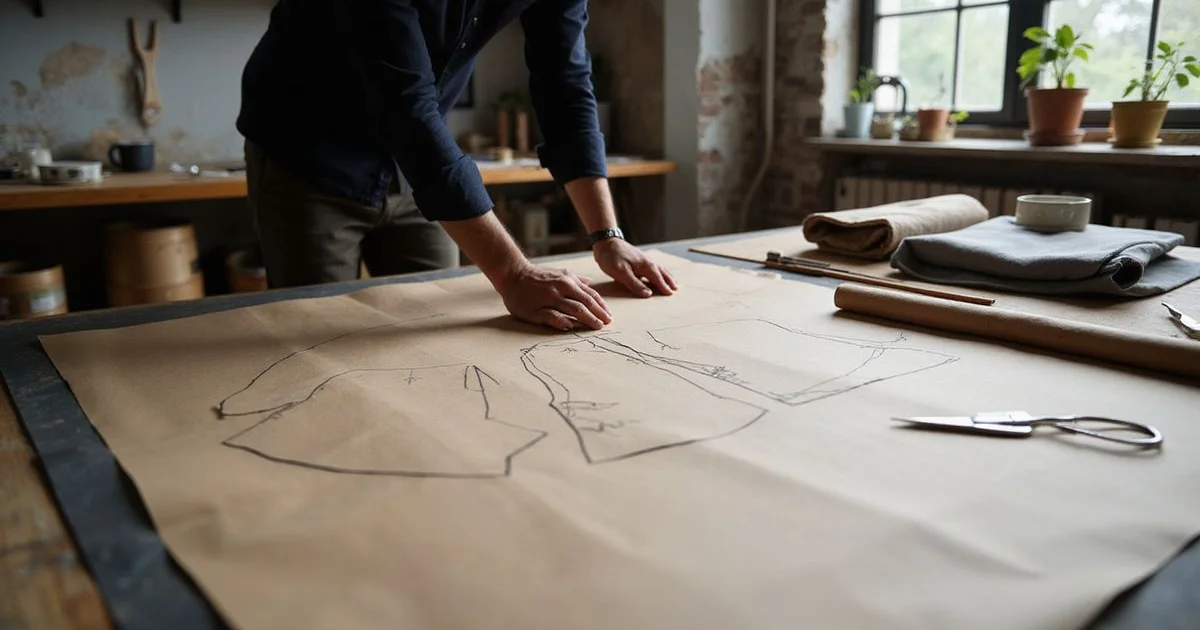
True bespoke tailoring takes a fundamentally different engineering approach. A cutter drafts a unique paper pattern for your body alone, working from more than thirty measurements and the trained eye of an experienced craftsman.
At Lanwin Tailor, this draft becomes part of our archive. We have patterns on file for clients whose grandfathers were dressed by my grandfather in the 1980s, and we still use them to refine new commissions.
Addressing the Body Honestly
A bespoke pattern accounts for things a block simply cannot.
- Shoulder slope: One pad can be shaved thinner than the other to level a natural drop.
- Postural alignment: The pattern follows the curve of your spine and the resting angle of your arms.
- Tropical considerations: Half-lined or unlined construction, paired with high-twist lightweight wools, keeps the jacket breathable through the Federal Highway commute and the heavily air-conditioned offices waiting on the other side.
The Construction Difference Most Clients Never See
The internal engineering of the jacket is where the gap between MTM and bespoke widens most dramatically.
Many MTM jackets rely on “fusing,” a heat-activated glue that bonds the interlining to the wool. It looks crisp on day one, but Petaling Jaya’s humidity and repeated dry cleaning can cause the glue to break down, leaving the dreaded “bubbling” along the chest.
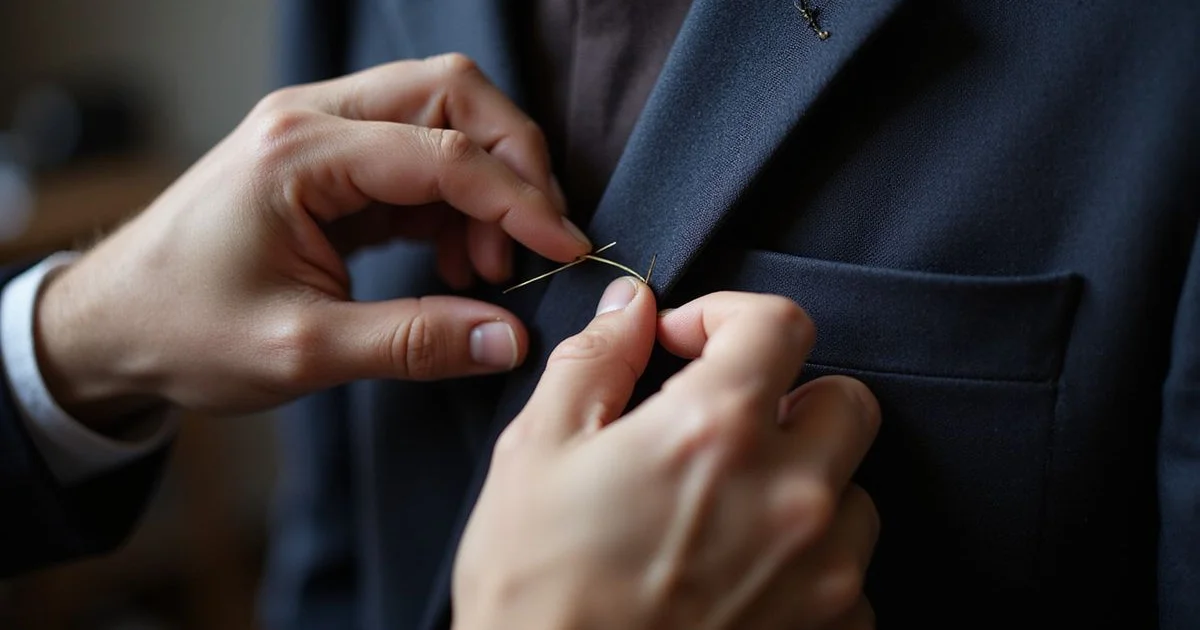
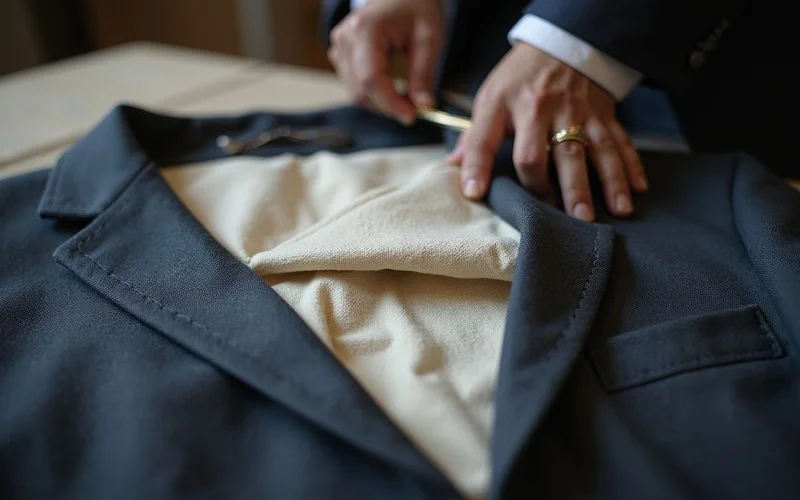
Bespoke commissions almost always use a full-floating canvas built from natural horsehair and camel hair. An artisan stitches it to the cloth with thousands of small, loose stitches that allow the canvas to move freely between the layers.
Why Hand-Padding Matters in a Tropical Climate
The floating canvas does three things glue cannot. It moulds to your chest with body heat over time, so the jacket gets more comfortable rather than less. It allows air to pass through the layers, which matters when the outdoor temperature sits at 33 degrees Celsius. And it preserves the natural roll of the lapel for years rather than months.
The Fitting Process
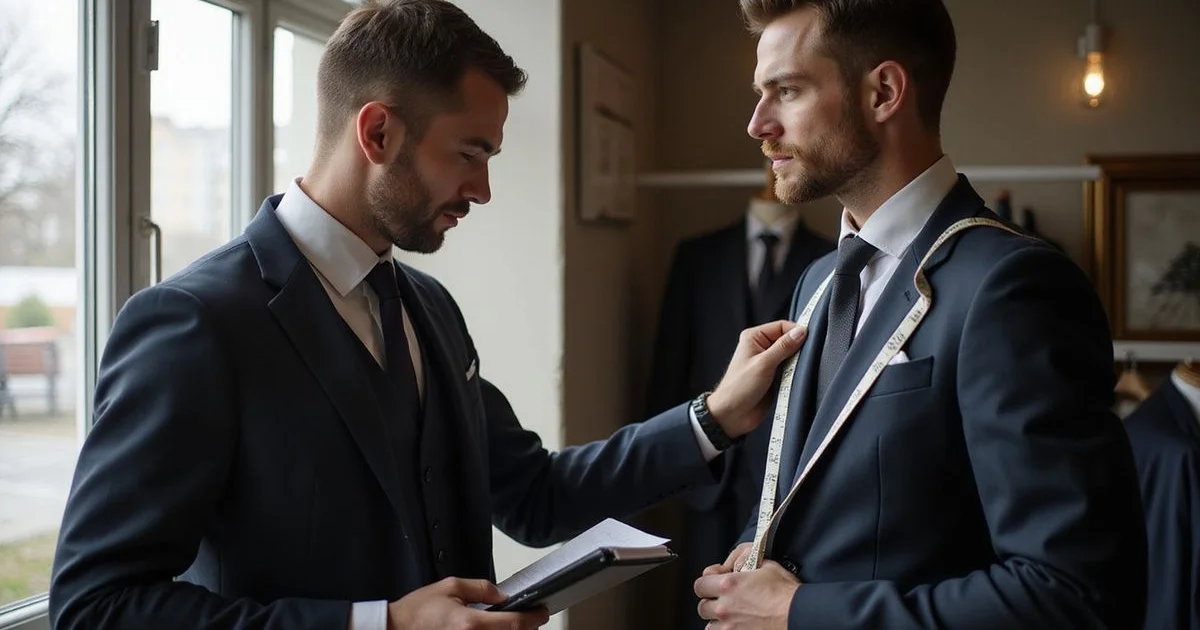
A made-to-measure session usually involves a single appointment. Measurements are taken, the data is sent off, and the finished suit appears weeks later for a final tweak.
Bespoke uses a series of basted fittings instead.
- Skeleton baste: You try on a rough version of the jacket held together with white cotton thread. We can rip seams and rebalance the entire garment before the cloth is cut for good.
- Forward fitting: The actual fabric is now in place, but the internal structure is still accessible for fine adjustment.
- Finishing check: A final review of button stance, hem length, and sleeve pitch against your shoes and shirt cuffs.
These appointments are part of what justifies the timeline of eight to twelve weeks for a true bespoke commission.
A Side-by-Side Comparison
| Feature | Made-to-Measure | True Bespoke |
|---|---|---|
| Foundation | Standard block pattern | Unique paper pattern |
| Average timeframe | 3 to 6 weeks | 8 to 12 weeks |
| Fittings | 1 plus alteration | 3 or more baste stages |
| Typical PJ price | RM2,000 to RM6,000 | RM6,500 to RM18,000+ |
| Lifespan | 3 to 7 years | 15 to 20+ years |
| Customisation depth | Visual details | Structural and visual |
When MTM Is Genuinely the Right Call
Made-to-measure is not inferior. It is a different tool for a different purpose. Choose it if your body falls within standard sizing, if you need a reliable suit for a wedding in Bandar Utama next month, or if you are building a working wardrobe of three or four jackets for the cost of one full bespoke commission.
When Bespoke Becomes the Smarter Investment
Consider true bespoke when you view your clothing as a long-term asset. The cost-per-wear maths almost always favours the better-built garment. A RM12,000 commission worn 200 times across a decade works out to roughly RM60 per wear, while a fused jacket that loses its shape after a year and a half quietly costs more.
The Lanwin Tailor team specialises in bespoke suits precisely because we believe most professionals in the Klang Valley deserve a garment cut for their body, not a generic block adjusted to fit. If you are tired of compromising on collar gaps and side vents that pull open, book a consultation and we will walk you through the canvas, the cloth, and the timeline in person.
Louis Wong
Third-generation master tailor leading the Lanwin Tailor atelier with Shanghainese drafting heritage refined for the Klang Valley.