Dress Shirt Collar Styles: A Practical Guide for Klang Valley Professionals
Understand spread, point, cutaway, and button-down collars and how to pick the right one for your face shape, tie knot, and daily routine in Selangor.
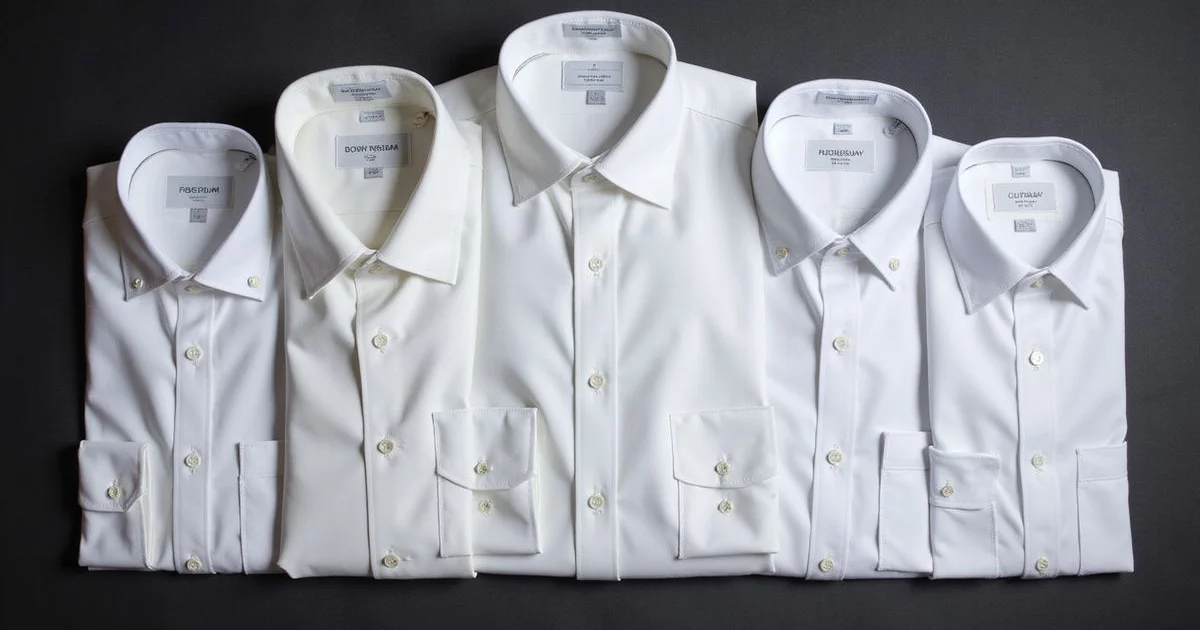
The collar is the part of a dress shirt your colleagues notice first. It frames your face on a Zoom call, anchors your tie during a Section 13 client meeting, and either supports or undermines the jacket sitting over it. Yet most professionals we measure at Lanwin Tailor have never thought carefully about the collar style they reach for each morning.
This guide breaks down the major styles, the geometry behind them, and which choices tend to suit the daily routines of Klang Valley professionals.
Why the Collar Decision Matters More Than You Think
A poorly chosen collar can make an expensive shirt look cheap. The points may flap loose, the gap behind the tie knot may yawn open, or the spread may overwhelm a slim face. None of these problems are about the cloth or the construction. They come down to a single design decision made before the cutter even started.
Our fitting specialist works with clients to match collar geometry to face shape, neck length, and tie habits. A few minutes of conversation prevents years of frustration.
The Spread Collar
A spread collar features points that angle outward, creating a wide opening at the neck. The angle typically falls between 90 and 120 degrees, which gives heavier tie knots room to sit flat without crowding the cloth.

This is the dominant style in modern business wear across Petaling Jaya, particularly in finance and consulting offices around Damansara Uptown.
Best suited to:
- Long or narrow faces, where horizontal lines balance vertical features
- Half-Windsor and full Windsor knots
- Heavier tie fabrics like raw silk or wool
- Confident corporate environments where the collar reads as authority
The trade-off is knot size. A small four-in-hand knot looks lost inside a wide spread, so plan your tie collection accordingly.
The Point Collar
The point collar uses straight, narrow points angled downward toward the chest, with a spread of less than 60 degrees. It is the classic American business shirt and remains popular in conservative legal and government circles.
The narrow geometry directs attention vertically, which can flatter rounder faces by creating a slimming effect. It also keeps the points safely tucked under jacket lapels, even when you reach for something across a desk.
The downside is that long points need stiff collar stays or they curl outward and look unkempt. Large tie knots, especially the full Windsor, push the points off the shirt body and create an unflattering bulge.
The Semi-Spread Collar
The semi-spread sits between the two extremes, with a moderate opening of roughly four inches between points. It is the most versatile collar in our shirt fabric books, and the one we recommend most often to clients building their first set of custom shirts.
It accommodates almost any tie knot, suits almost any face shape, and reads as professional in nearly every Klang Valley office environment. The honest weakness is that it rarely makes a strong style statement. It is a quiet choice for people who want a quiet shirt.
The Cutaway Collar
The cutaway pushes the spread to its limit, with points that angle so sharply outward they sometimes form an almost horizontal line. It is a confident, slightly fashion-forward choice that exposes the entire tie knot.
This works beautifully if you favour large knots and bold ties. It looks deliberate and modern, especially in creative fields like advertising or design. Just be aware that some traditional corporate cultures may read it as flashy, so it may not be the right pick for a job interview at a more conservative firm.
The Button-Down Collar
The button-down was invented by Brooks Brothers in 1896 for polo players who needed their collars to stay flat in the wind. It has since become the workhorse of business-casual wardrobes worldwide.

We love a soft, unfused button-down for the gentle “roll” the cloth makes between the collar band and the button. That subtle curve creates a dimension flat collars cannot replicate.
Button-downs are ideal for:
- Tie-free office days, increasingly common in Petaling Jaya tech companies
- Oxford cloth, flannel, and chambray fabrics
- Layering under sweaters or unstructured jackets
Keep the buttons fastened. An unbuttoned button-down looks like a mistake rather than a style choice.
The Club Collar and the Tab Collar
Two niche collars deserve a mention for clients who want something distinctive.
The club collar features rounded points instead of angular ones. It originated at Eton College in the 1850s and returns to fashion every few years thanks to period dramas. It pairs beautifully with tweed jackets and three-piece commissions, and the soft curve flatters square jawlines.
The tab collar uses a small fabric tab that snaps behind the tie knot, pushing the knot forward into a clean architectural arch. It became famous again through Daniel Craig’s James Bond. The catch is that you cannot wear a tab collar without a tie, so it is strictly for clients who genuinely love wearing neckwear.
Don’t Forget Collar Height
Most off-the-rack shirts use a standard collar band of about 1.5 inches. That works for an average neck length, but it ignores everything in between.
- Taller bands (1.75 to 2 inches) suit longer necks and create a more formal, commanding appearance
- Shorter bands (1 to 1.25 inches) suit shorter necks and prevent the collar from digging into the chin
When we draft a custom shirt at Lanwin Tailor, we measure this dimension to the quarter inch. It is one of the small details that separates a shirt that fits from one that you forget you are wearing.
Matching Collar to Face and Knot
Personal style always wins, but geometry is a useful starting point.
| Face shape | Recommended collar | Why it works |
|---|---|---|
| Round | Point | Vertical lines lengthen the face |
| Long | Spread or cutaway | Horizontal lines balance the length |
| Square | Club or semi-spread | Curves and moderate angles soften the jaw |
| Heart | Semi-spread | Balances a wider forehead |
| Diamond | Spread or cutaway | Visually widens the jawline |
Match your tie knot to the opening as well. Wide knots need wide collars. Narrow knots belong in narrow collars. Mismatches create awkward gaps and bunching that no amount of pressing will fix.
The Bespoke Advantage
Off-the-rack shirts are designed for an average that almost nobody actually fits. A custom shirt lets you pick the spread angle, the point length, the band height, and the collar weight to match your face, your wardrobe, and your daily environment.
If you are ready to retire the collar gaps and the curling points, book a consultation at our Petaling Jaya studio. We will walk you through the cloth books, take precise measurements, and build a shirt collar that finally sits the way it should.
Mei Ling Chen
Expert insights from the Lanwin Tailor tailoring team in Petaling Jaya.