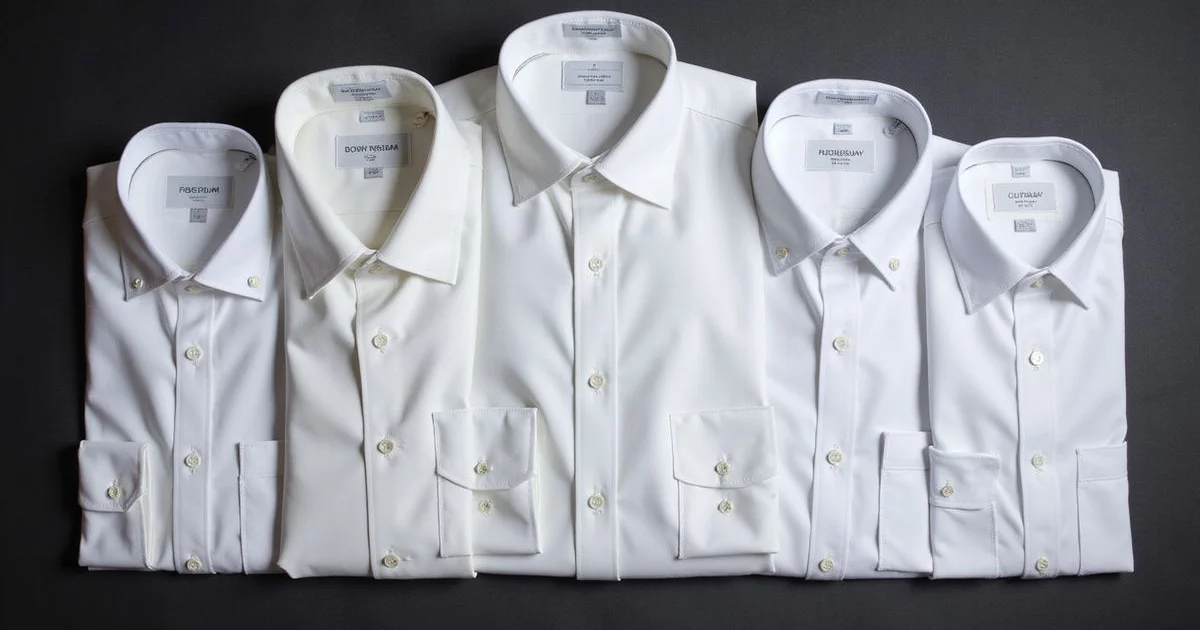
The Perfect Dress Shirt Fit for the Tropical Office
A practical fit guide for dress shirts in Malaysia's humid climate. Learn how collar, body, sleeves, and cuffs should sit for a polished professional look.

The dress shirt is the workhorse of any professional wardrobe and almost always the worst-fitting item in it. A poorly fitted shirt undermines the jacket sitting over it, the tie sitting under it, and the impression you create the moment you walk into a meeting at Surian Tower or Centum @ Oasis Corporate Park.
In the Klang Valley, fit also has a comfort dimension you cannot ignore. The transition from outdoor humidity to corporate air conditioning is unforgiving. A shirt that bunches at the waist when you sit becomes a damp problem within an hour. This guide breaks down what a properly fitted dress shirt looks like for our climate, our offices, and our daily routines.
Why Off-the-Rack Sizing Fails Most People
A “15.5/34” tag on a department store shirt assumes a single set of proportions for neck, shoulders, chest, waist, sleeves, and body length. If your build differs from those assumptions in even one dimension, you compromise on every other dimension. That is the maths of off-the-rack sizing, and it is why custom shirts have become so popular among professionals in Petaling Jaya.
The Collar Comes First
Your collar is the most visible element of your shirt and the most uncomfortable when wrong. Tight collars cause headaches and restrict movement. Loose collars look sloppy and gap behind the tie knot.
Neck circumference: With the top button fastened, you should be able to slip two fingers comfortably between your neck and the collar band. One finger means you will feel choked by lunchtime. Three fingers means the collar will gap visibly all day.
Construction quality: Cheap fused collars eventually bubble after repeated laundering, a defect we call “bacon collar” in the trade. A high-quality fused collar from a reputable workshop holds its shape for years. An unfused or stitched-canvas collar offers a softer, more relaxed look that improves with wear.
Collar height: The collar should stand tall enough that your jacket collar rests gently against it, with about half an inch of shirt visible above the jacket all the way around.
Points: The tips should lie flat against the shirt body. If they curl outward, either the construction is poor or the style is wrong for the way your shoulders move.
The Shoulders Set the Foundation
The shirt shoulder seam should sit exactly where your shoulder bone meets your arm. Too far down the arm and the shirt is oversized. Too high and you will feel restricted every time you reach for something.
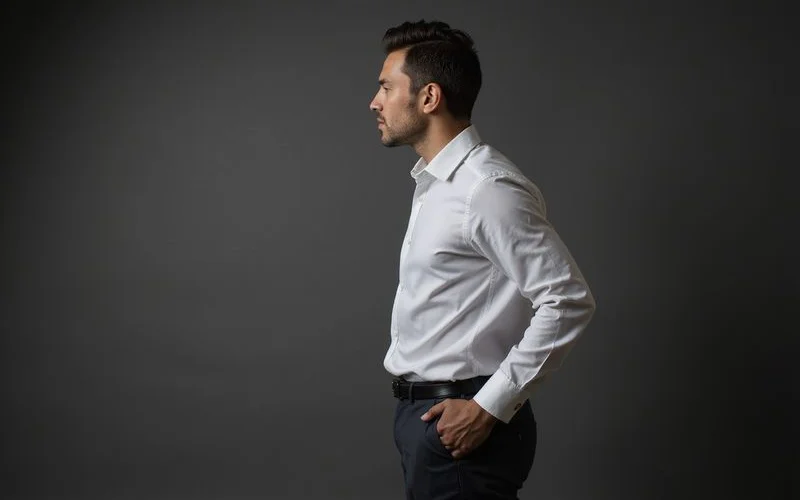
A well-built dress shirt also has a “split yoke,” where the panel across the upper back is made from two pieces of cloth cut on a slight angle. This adds movement and supports asymmetrical shoulders, which almost everyone has to some degree.
The Body: Neither Tent Nor Tourniquet
The “ease” of a shirt is the difference between your actual chest measurement and the cloth measurement. Most ready-made “Classic Fit” shirts run with six to eight inches of ease, which creates that telltale parachute effect when tucked in.
| Fit type | Chest ease | Best for |
|---|---|---|
| Slim | 3 to 4 inches | Athletic builds, modern silhouette |
| Tailored | 4 to 5 inches | Most professional builds |
| Classic | 5 to 6 inches | Comfort-first preference |
| Vintage | 7+ inches | Almost never flattering |
Lift your arms above your head while standing in front of a mirror. The shirt should stay tucked. Sit down. The buttons should not pull and the placket should not gap.
Waist Suppression and Back Darts
Better dress shirts use back darts (two vertical seams sewn into the rear panel) to pull the cloth in at the waist. This is essential for clients with athletic drops, where the chest is significantly wider than the waist.
Off-the-rack shirts are often cut in a single straight line from chest to hem because that simpler construction fits the largest possible range of bodies. The trade-off is that it actually flatters very few of them.
A custom shirt can be cut to follow your specific taper precisely, eliminating the need for any tucking gymnastics in the morning.
Sleeves and the Wrist Bone Rule
With your arms hanging naturally, the sleeve should end at your wrist bone, where your hand meets your wrist. When wearing a jacket, roughly half an inch of cuff should be visible below the jacket sleeve.
Cotton shrinks. We tell every client to expect about half an inch of shrinkage over the first few washes, and we cut our sleeves accordingly.
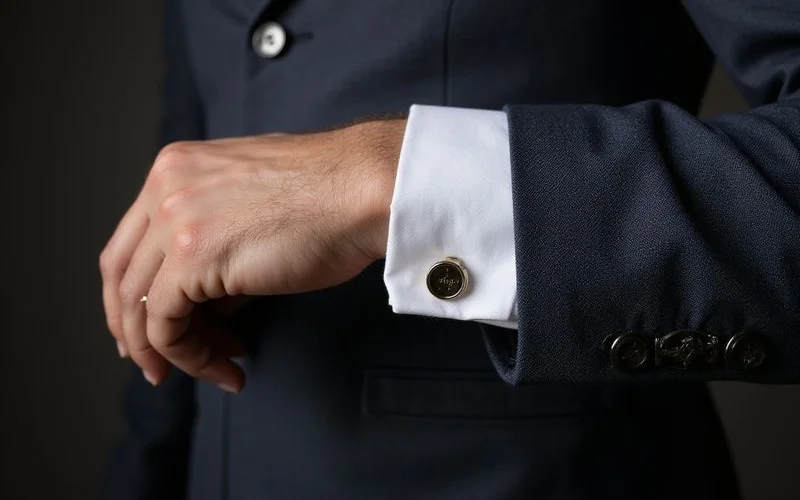
The sleeve should slide easily over your forearm without billowing. Excessive bunching at the elbow signals a sleeve that is too wide.
The Armhole Detail Most People Miss
The armhole position is where custom shirts genuinely shine. A high armhole sits close to your armpit and allows you to raise your arm without dragging the entire shirt out of your trousers. A dropped armhole, common in cheap ready-made shirts, causes the shirt to untuck the moment you reach for a coffee cup. We call this the “flying squirrel” effect, and it is one of the first things we fix when a client moves to bespoke.
Cuffs and Watch Clearance
The cuff should be snug enough that it does not slip over your hand when unbuttoned, but loose enough to accommodate a watch and move freely on your wrist. When buttoned, you should be able to fit a finger inside comfortably.
If you wear a substantial timepiece, ask your tailor to add half an inch to the cuff circumference on your watch wrist. It prevents the cuff from getting stuck above the watch face during a handshake.
Local Climate Considerations
Two things matter more in Petaling Jaya than in cooler climates.
First, fabric weight. Lightweight Thomas Mason poplins and high-twist Albini cottons breathe better than dense Oxford weaves, and they hold up to the constant transition between humidity and air conditioning. Heavier fabrics trap moisture and become uncomfortable quickly.
Second, body length. We cut shirts a touch longer than European norms to ensure they stay tucked when you reach across a meeting room table. The Klang Valley professional spends a lot of time leaning over laptops, and a shirt that pulls free is a constant distraction.
Common Fit Problems
| Problem | Likely cause |
|---|---|
| Collar gap | Collar band too large or points too long |
| Shoulder divots | Shoulder seam in the wrong position |
| Billowing waist | Too much chest ease, no back darts |
| Cuff slips over hand | Cuff circumference too generous |
| Pulling placket | Chest or waist too tight |
| Untucking when reaching | Armhole dropped too low |
Why Custom Solves These Problems
Off-the-rack assumes an average that almost nobody is. A custom shirt takes your actual measurements and constructs a garment around your specific dimensions. The collar fits the way you breathe. The body follows your taper. The sleeves account for the small differences between your left and right arms, which are more common than people realise.
At Lanwin Tailor, we cut from Thomas Mason and Albini cloths chosen specifically for breathability in tropical conditions. The result is a shirt that fits everywhere, not just in two or three places, and that holds its line through the toughest commute the Federal Highway can throw at it.
If you are curious about how a properly fitted dress shirt feels, book a consultation at our PJ studio. We will measure carefully, walk you through the cloth options, and build something you will not want to take off.
Mei Ling Chen
Expert insights from the Lanwin Tailor tailoring team in Petaling Jaya.